Film Still Photography
  • Home
  • About
  • Blog
  • Vintage Cameras
    • Argus 75
    • Brownie Flash II
    • Contax G2
    • Ensign Selfix 820
    • FED-1 (PE0320)
    • Graflex Crown Graphic
    • Ihagee Exa
    • Leica iiif
    • Leica M6
    • Nikon S2
    • Nikon F
    • Nikon F2
    • Nikon F3
    • Nikon FA
    • Olympus OM-1
    • Olympus OM-2 SPOT
    • Olympus Stylus
    • Pentacon Six
    • Pentax Spotmatic IIa
    • Rollei 35
    • Voigtlander 15mm ver III
    • Yashica C
    • Zeiss Ikon Nettar 515/2
    • Nikon F6
    • Nikkormat EL
  • Learning Composition
    • Square Composition
    • Leading Lines
    • Symmetry
    • Framing
    • Keep the Right Strong
    • Single & Multi Elements
    • Color in Composition
    • Deep Dive Bubble Man
  • Darkroom Lessons
    • AGO Film Processor
    • Archival Preparation
    • Building a Sink
    • Air Ventilation
    • Analyser Pro
    • Development Hints
    • Primer for Film Photography
    • Bulk Loading Film
    • Pushing & Pulling Film
    • Color Development
    • Digital Contact Sheets
    • Stick to One Film Stock?
    • HP5+ Shot at 200 ISO
    • HP5 Shot at 1600 ISO
    • HP5 Shot at 3200 ISO
    • Medium Format
    • Washing Film
    • Split Grade Printing
    • Using Distilled Water in Film Development
    • Darkroom Paper
    • Foma100 EI 400
  • Photography Books & Films
    • Colin O'Brien
    • Lartigue Life in Color
    • Magnum Contact Sheets
    • Top Photography Movies
    • William Eggleston's Guide
    • Helen Levitt
    • Sally Mann Immediate Family
    • Saul Leiter Early B&W
    • Leica 100 yrs
    • Calendar Days of Asaya Hamaya
    • The Decisive Moment
    • Regarding Women
    • Robert Capa in Love and War
    • HCB The Decisive Moment
    • Zambian Portraits
  • Single Image Deep Dive
    • Sergio Larrain "A Man After Dark"
    • Colin O'Brien 'Comings & Goings"
    • Erwitt Mother & Child
    • Man Running
    • Samuel Becket
    • Koudelka Wristwatch
    • Dovima with Elephants
    • Diane Arbus Girl Sitting in Bed
    • Paul Strand Wall Street
Salzburg, Austria

"No place is boring if you've had a good night's sleep and a pocket full of film." - Robert Adams
​
"Tea first, then photography..." - Philip Lee Harvey

From an Article written by Philip Lee Harvey
The Photographers Journey Today

7/30/2023

0 Comments

 
Picture
Photography has changed since 1827 with Niépce. Consider that the art form has gone through plate photography, film photography and now is in digital photography. But beyond the technology used to capture an image, the styles of photography have changed and so have the photographers. 
George Eastman made great strides to turn a pastime of the elite into an adventure of the common man. While film photography was never cheap, he made it accessible to many more people. This changed the person behind the lens and their journey, and the art they created was different.
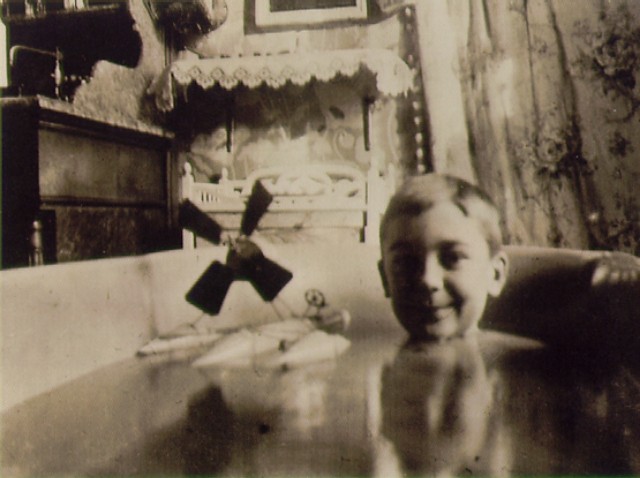
For an example consider Henri Lartigue, a young man who was born into the upper class of France in 1894. He was given his camera by a father whose belief was that his children would never have to work a day in their lives so they should enjoy life. And enjoy life they did and fortunately (for us anyway) Henri Lartigue was given a camera and he rarely put it down.
Lartigue's work fascinates me and it shows us a glimpse into the world of the upper crust through WWI and WWII. Holidays around world and in each spot he would capture some amazing works of art. His camera was always tested to its limit and once the limit was found, a new camera would be purchased. His images are inventive, playful and perfectly balanced. He was a master who was born with a silver spoon in his mouth.
Picture
Henri Lartigue in his bath as a young boy. Look at the opulence but also the ingenuity of the photo for its time.
Picture
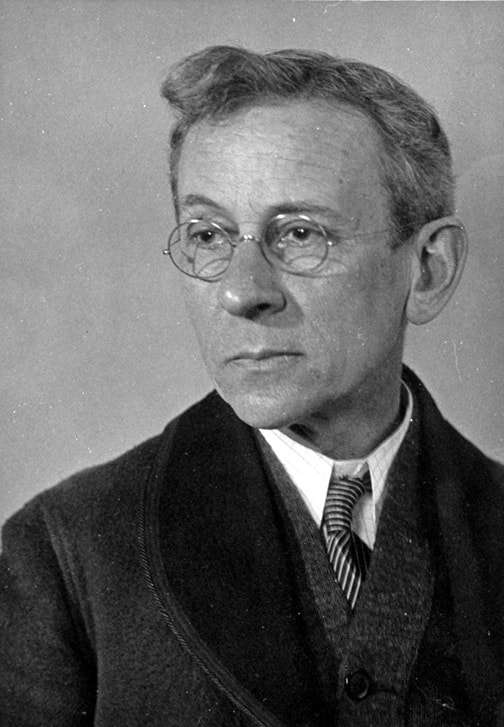
If Lartigue shows us the life of the elite, then Lewis Hine shows us the other side of the coin. Born 1874 his father passed when he was young forcing him to work early but the importance of education was strong in his family and he saved money to go to University and then became a teacher. He began to appreciate photography as a teaching tool and soon used it to change the world...or at least the US. His photographs of child labor helped bring in a new series of laws designed to protect children. His artwork capture dignified suffering, detailed environmental portraiture, perfectly composed and unflinchingly real. Even 100 years after the photo was taken, I can see myself reflected in they eyes of people he photographed.
Both photographers created art. Both were true to their convictions. Both are master photographers that I admire. But their journey's were very different from one another and as we can see from the art they created, the journey really does matter.  

I am reading Edward Weston's Daybooks which is an interesting glimpse into his daily life. There is a bit on life in the 1920's, a bit on convention, photography and technology in there to enjoy. But one concept he brings forward is the evolution of an artist. He speaks to Diego Rivera's work and is initially enthralled by his work.  But over the years he does not see Diego evolving. He sees him merely mimicking previous success while other, less known artists, kept evolving making better and better art.

This got me thinking about the journey that Lartigue and Hine had and how this impacted their art. I also began looking to see how their work evolved over time. And an interesting thing struck me, the vast majority of the masters of photography evolved in their work. Their journey took them to different paths and new ways of seeing the world. And this impacted their art.

We are all going on a journey and it is influenced by everything we have around us. Social media has made a massive impact on the journey and by its nature, the outcome as well.

If I look at my photographic journey so far, I would note that I was first drawn to photography because of a need to take pictures of my growing family and out international lifestyle. I became fascinated by the physics and mechanics of the equipment and I pushed to learn more.

I quickly found the internet to be a very powerful tool to learn photography. We had been transferred to Saudi Arabia and photography was frowned upon back then. So I could not take my camera out, so I made up for it by studying and learning. I found photography forums and began posting and learning. It was wonderful to take still life's in the house and then get the critique back. I tried HDR photography, and made all sorts of wild photographs that were clearly impossible to actually exist. Every element I tried I felt would be it for me. It became my photographic world until the next gimmick was found.

This then took me to look for on-line classes and I found Kelby Training. Wonderful videos on demand to teach you all kinds of photography related concepts. I kept trying to understand how to build an image worth looking at. Snapshots were not good enough I wanted to image that grabs the viewer. In one of the video classes I was told to try some photography tours, which I did. In all the places we visited I found a local photographer who would be willing to take me along on a day trip. I watched them work, I learned.
There was nothing wrong with my pictures. They were colorful, necessary for modern computer screens, they were well balanced and they used light as a tool. They embraced negative space and created some nice shots. They blended into the crowded photography sites and were quickly forgotten. Nothing wrong with these images, I still like a few of them, but there was something missing...I wanted to do more, I wanted to feel more and I wanted to viewer to feel it as well. I did not want to take the viewer to Las Vegas, I wanted to take the viewer to their hometown. 
Picture
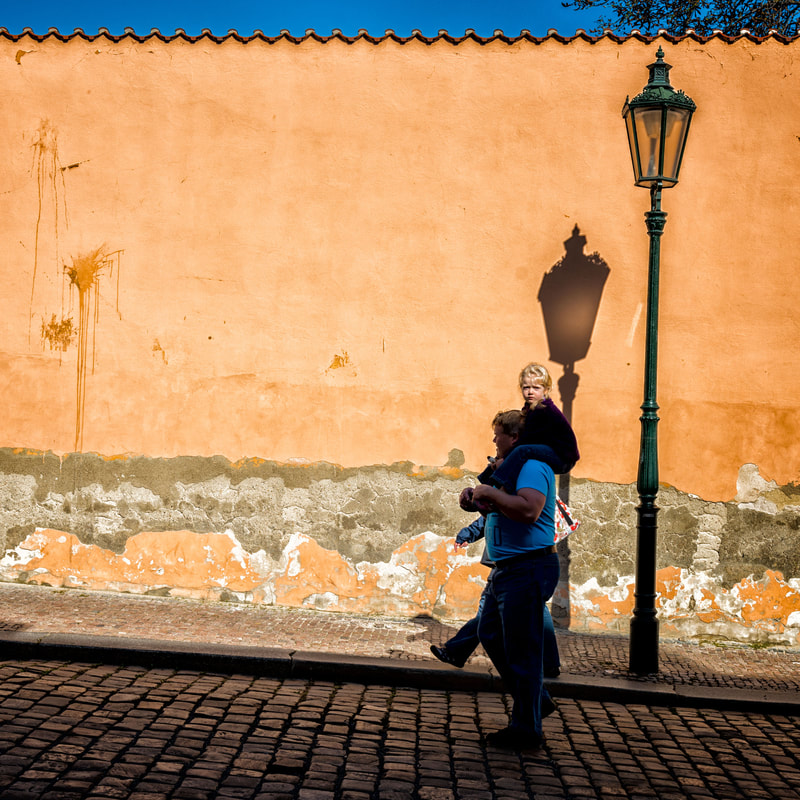
Travel Photography taken in Prague. A hunted background and a lucky look of the young girl.
My next step was to look at the masters of old. I found a YouTube channel where Ted Forbes introduced me to a bunch of master photographers. He began speaking about their motivation, inspiration and their evolution. I began to buy photography books and I began to look through them. Every Sunday morning, while the family was asleep, I had my coffee and I went on a journey with one of these master photographers. Paul Strand, Edward Weston, Alfred Stieglitz, Richard Avedon, Henri Cartier-Bresson, Brassai, Robert Frank, Helen Levitt, Sally Mann and so many others. Some alive, most dead.
Picture
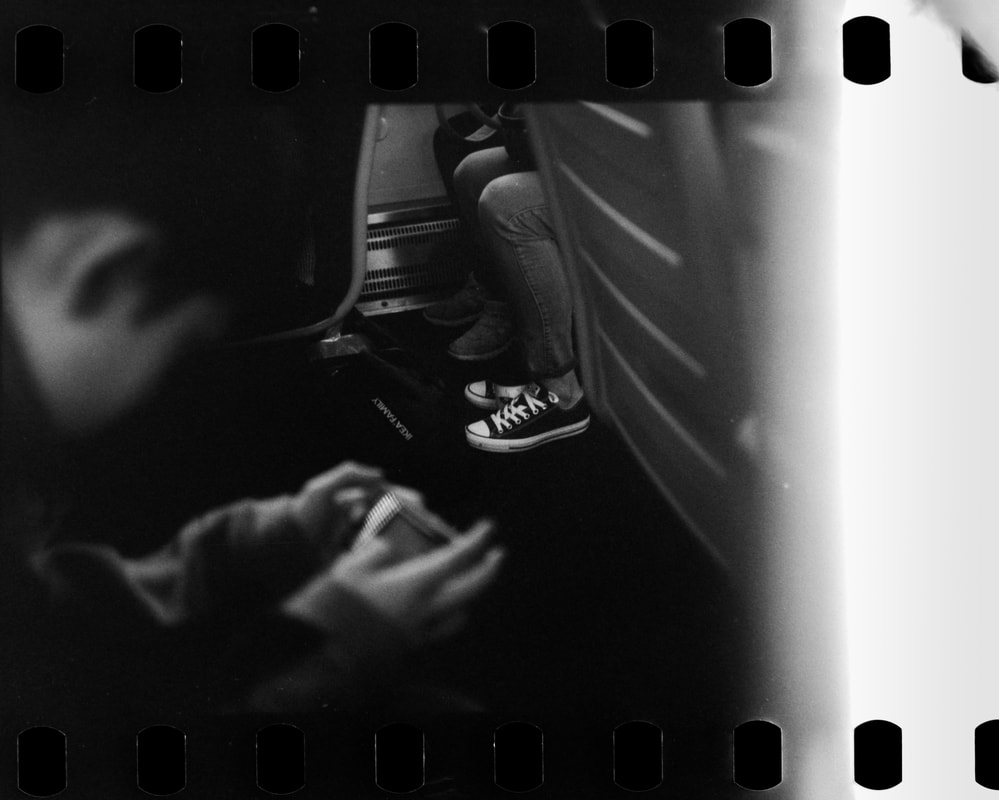
Digital was too easy to manipulate, to change what was there. I still love digital photography, but just to the basics of editing. Heavy editing just turns an image into something everyone has already seen. Film limited me and I love the limitation. But again, I was focused on the mechanics, the camera, the medium and not on what I was trying to shoot. All I knew was that what I was shooting was making me happy and I was getting better.
Now my journey is still evolving. I am in the darkroom making chemical prints and I am pick up my camera based on the type of photography I want to shoot. I stopped carrying so much gear and lenses and stick to the basics. I now shoot based on shared memory. I believe we all have a memory of a simpler time, of simple objects and simple pleasures. Tapping into this shared memory is what fascinates me at the moment. I rarely get it right but I am trying and having a great deal of fun with it.
Picture
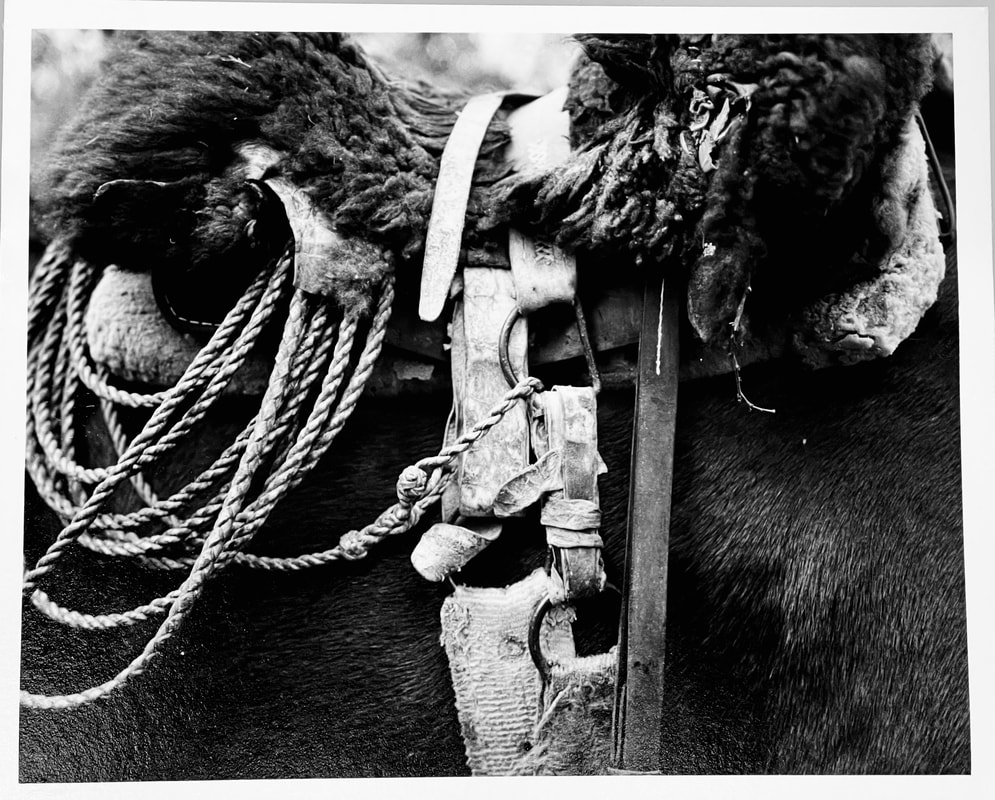
A snapshot of a darkroom print but I love the texture in the simple saddle. It is not a completed print as I still have work to do on it....but that is the journey.
Now I am making prints of simpler things and then going back to the print to improve on them. Not only am I going on a journey so are my photographs. They are not done until they are put in a frame and few get that honor and even fewer stay in their frames. My tastes are changing, my photography is changing but much as Lartigue did, I shoot what makes me happy.
0 Comments

Leica ME (Leica M9) Today

7/23/2023

0 Comments

 
Picture
I bought my first digital Leica back in 2016 in London. I got a good price from it with very few actuations and in perfect cosmetic shape. It is the Leica ME.  For those unfamiliar, Leica decided to make a "more affordable" digital camera and created the Leica ME. It is essentially a Leica M9 with a few software changes, a different color paint but still the same Leica quality (both good and bad but that is a story for another time). 

I knew a bit about the Leica sensor issue, but since (at the time) Leica was replacing the sensor free of charge I did not worry too much.  I never needed the sensor changed and after a recent check have seen that mine was built with one of the newer sensors but still CCD.  There are some differences between the CCD and CMOS sensor, some positive and some negative but as with most photography related things, it is a subjective discussion.

A few years ago I purchased a Leica M10 but cannot seem to allow myself to sell the Leica ME and the reason is that little CCD sensor.  It produces a color that I cannot get from another camera. So I carry a heavy, old camera with a horrible back display screen and suffer through slow reaction times and horrible low light performance. All this for a color treatment I cannot seem to replicate. 
Picture
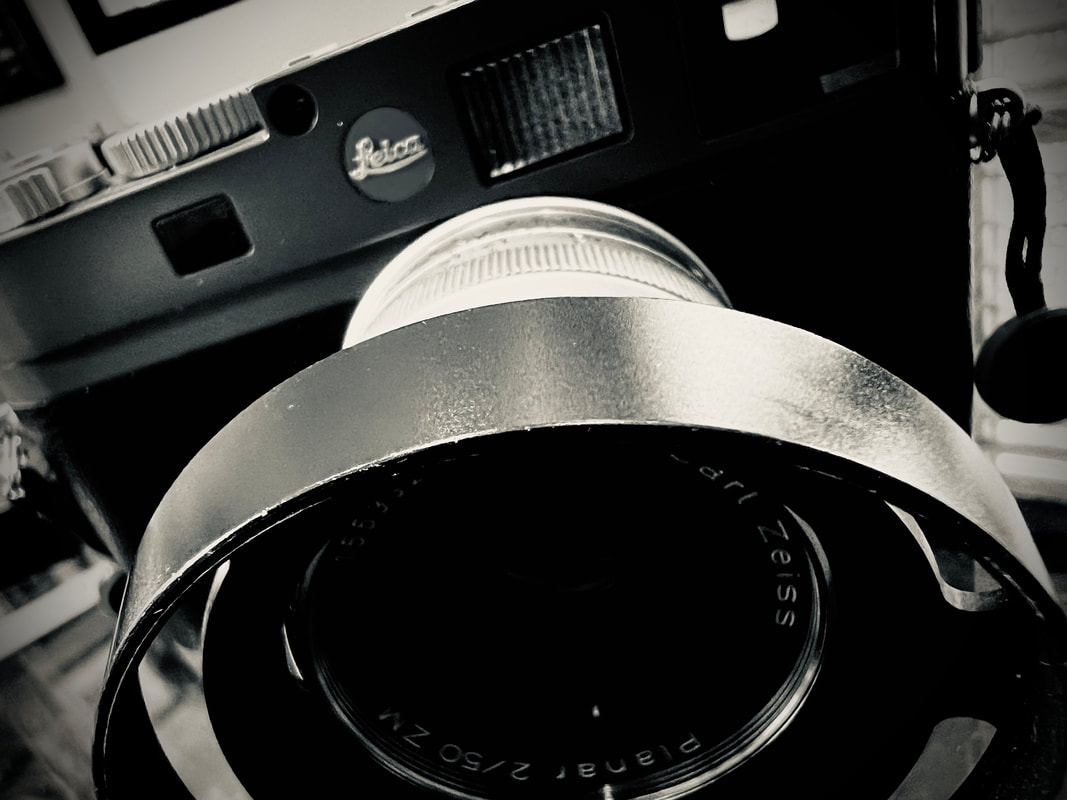
Couple the Leica ME with a Zeiss Planar 50mm f/2 lens and you have a magical combination. Open it wide open and watch the background detail fall away, and the colors just seem to fall into place.
Picture
So on a recent trip to Argentina, I found myself carrying three film cameras (Nikon F2, Rolleiflex 2.8 and the Fuji GW690III) my iPhone and my Leica ME. The film cameras all were loaded with Ilford HP-5 and the Leica had a single 32mb card with just the 50mm lens. 

It was winter in Argentina and while I was able to capture some bright sunny days, I needed the color photographs to capture the subdued tones of winter. When color really matters, it is the Leica ME that gets dusted off and used. 

So how did my trip go? Great however my batteries are getting old (hey they lasted since 2016) and would not hold much of a charge. But it was enough for a half day worth of shooting.
The colors were nailed to perfection and the broad range of the Zeiss glass left me plenty to shoot for.  

I keep my shots at or below ISO 800 and usually leave shutter speed to automatic with a minimum of 1/60 sec (with this camera I can drop to 1/30 sec without movement but want to manually set this up) and then select my aperture based on my aesthetic desires.
Picture
Picture
Even with the technological advances this camera lacks, it is still a powerful artistic tool. Compared to the film cameras I like to use, this camera has a great deal of technology wizardry. So even today, in 2023 with a Leica M10 available, when color counts I reach for this relic.  With 18Mp it has enough for me to enlarge to any size I like, and plenty of detail to salivate over. Just keep it to the lower ISO and you have an amazing tool to use. 
0 Comments

"A maximum of detail with a maximum of simplification" When Heroes Meet

7/4/2023

0 Comments

 
Picture
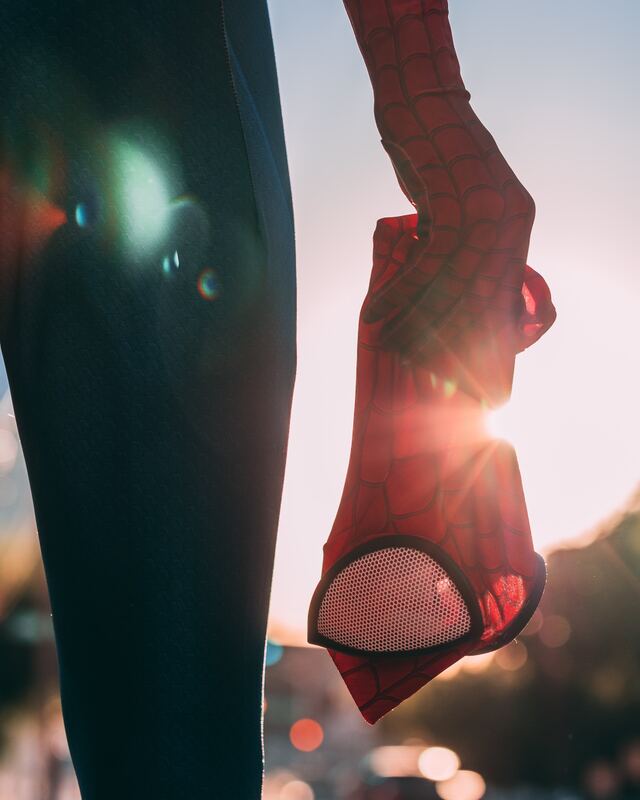
Photo by Joey Nicotra on Unsplash
I study masters of photography much as a young person might look at Marvel Super Heroes.  Each one individually is amazingly powerful, with their own super power and approach to the world around them. But when two of these super heroes come into contact with one another.....wow! Now you have something resembling legendary!

I have the notes of just one such encounter.  This involved Eduard Weston and Alfred Stieglitz.  Let me begin by introducing them for those who may now know what these gentlemen were and why they matter to us today...

Edward Weston (1886-1958) was a prominent American photographer known for his pioneering work and artistic vision. Born in Highland Park, Illinois, Weston's passion for photography emerged in his teenage years and led him to become one of the most influential photographers of the 20th century. He experimented with various genres, including landscapes, portraits, and close-up studies, exploring the essence of his subjects through meticulous compositions and precise lighting. Weston's mastery of form, texture, and abstraction revolutionized the medium, leaving a lasting impact on the art of photography. His work continues to inspire and captivate audiences worldwide.

Alfred Stieglitz (1864-1946) stands as a seminal figure in the history of photography, renowned for his groundbreaking work and profound influence on the medium. Born in Hoboken, New Jersey, Stieglitz developed a passion for photography at an early age. He was instrumental in elevating photography to the status of fine art and played a pivotal role in the recognition of photography as a legitimate artistic form.

Stieglitz championed the idea that photography was a means of personal expression, going beyond mere documentation. Through his iconic images, he sought to capture the essence of his subjects and evoke emotional responses. He founded the Photo-Secession movement in 1902, which aimed to promote photography as an art form and encourage creative exploration. Stieglitz also established the influential publication Camera Work, which showcased the work of pioneering photographers.

With his masterful use of light, composition, and depth, Stieglitz revolutionized photographic aesthetics. He embraced both pictorialism and modernism, constantly pushing the boundaries of the medium. Stieglitz's legacy is marked by his profound impact on shaping photography as an art, inspiring generations of photographers to embrace its expressive potential and redefine the boundaries of the visual language.

So what happens when these two towers of men meet up?  The following line described their interaction, according to Edward Weston....
​
"A maximum of detail with a maximum of simplification" summed up his view of Stieglitz attitude towards photography.  But here is where the usually overpowering Stieglitz found his match in the diminutive Weston. You see, Stieglitz would roll over people with his vision of photography and art, he would rip into monologue after monologue rarely letting anyone else speak.  And most were happy to hear him speak.  Then he would turn to the photographs that the audience brought and would rip them apart.

With rare exception he would latch onto a detail, a wrinkle, a tuff of hair and would demand better.  For "Nothing must be unconsidered, their must be a complete release".  With such blanket statements and hurried speech, no one would challenge and there was his super power. His vision, and his unwillingness to compromise made him THE force of Photography in its first century. 

I saw photographer after photographer work to appease him, to gain his respect that I assumed it was universal.  Then I read Edward Weston's interaction with him where Edward states "In my enthusiasm I do not accept Stieglitz as an infallible master, nor would he want me to."  Stieglitz told him "friends made me out a god, when all I asked was to be treated as a human being, then turned on me the I couldn't be all they asked and 291 closed.".  But Stieglitz never wanted to be taken as an equal. He wanted to have the final word. His love interests and friendships rose and fell based on their willingness to adore him.

But Edward had a super power of his own.  Edward knew where he was in his photographic journey..."I took my work to show Stieglitz. He laid it open to attack, and then discarded print after print, prints I loved. Yet I am happy, for I gained in strength, in fact strengthened my own opinion. I was ripe to change, was changing, yes changed, when I went to New York. I had shown my portfolio of photographs all over New York, and had been showered with praise which meant very little to me, for all the time I knew that I was showing my past.". 

Stieglitz vision and ego were countered by a man who was sure....not sure of where he was as a photographer but very sure of where he was going. He viewed his art in terms of time, and knew that hew as already onto the next phase of growth. So to critique works that represented an old phase of growth was of little value to him.  

But Stieglitz power was strong enough to influence Edward a little. But for ever more, Edward would comment on other photographers such as Paul Strand and how they were over influenced by Stieglitz. 

Two Super Heroes faced off, and both changed the other slightly but neither can claim the victory. 
0 Comments

    Author

    Patrick...confirmed film & digital photography addict.

    Archives

    September 2025
    August 2025
    July 2025
    June 2025
    May 2025
    April 2025
    March 2025
    January 2025
    December 2024
    December 2023
    August 2023
    July 2023
    April 2023
    March 2023
    January 2023
    March 2022
    January 2022
    December 2021
    November 2021
    October 2020
    August 2020
    June 2020
    May 2020
    April 2020
    December 2019
    November 2019
    October 2019
    September 2019
    August 2019
    June 2019
    May 2019
    April 2019
    March 2019
    October 2018
    September 2018
    August 2018
    July 2018
    June 2018
    May 2018
    April 2018
    March 2018
    February 2018
    January 2018
    December 2017
    November 2017
    October 2017
    September 2017
    August 2017
    July 2017
    June 2017
    May 2017
    April 2017
    March 2017
    February 2017
    January 2017
    December 2016
    November 2016
    October 2016
    September 2016
    August 2016

    Categories

    All

    RSS Feed

Powered by Create your own unique website with customizable templates.
Photos from left-hand, Ant Jackson, Skley, mikecogh, Helen.Yang, TheeErin, Dean Hochman, CJS*64, DaveR1988, FootMassagez, Loco Steve, dmytrok, Christiaan Colen, Lars Plougmann, FootMassagez, astrangelyisolatedplace, quinn.anya, spline_splinson
  • Home
  • About
  • Blog
  • Vintage Cameras
    • Argus 75
    • Brownie Flash II
    • Contax G2
    • Ensign Selfix 820
    • FED-1 (PE0320)
    • Graflex Crown Graphic
    • Ihagee Exa
    • Leica iiif
    • Leica M6
    • Nikon S2
    • Nikon F
    • Nikon F2
    • Nikon F3
    • Nikon FA
    • Olympus OM-1
    • Olympus OM-2 SPOT
    • Olympus Stylus
    • Pentacon Six
    • Pentax Spotmatic IIa
    • Rollei 35
    • Voigtlander 15mm ver III
    • Yashica C
    • Zeiss Ikon Nettar 515/2
    • Nikon F6
    • Nikkormat EL
  • Learning Composition
    • Square Composition
    • Leading Lines
    • Symmetry
    • Framing
    • Keep the Right Strong
    • Single & Multi Elements
    • Color in Composition
    • Deep Dive Bubble Man
  • Darkroom Lessons
    • AGO Film Processor
    • Archival Preparation
    • Building a Sink
    • Air Ventilation
    • Analyser Pro
    • Development Hints
    • Primer for Film Photography
    • Bulk Loading Film
    • Pushing & Pulling Film
    • Color Development
    • Digital Contact Sheets
    • Stick to One Film Stock?
    • HP5+ Shot at 200 ISO
    • HP5 Shot at 1600 ISO
    • HP5 Shot at 3200 ISO
    • Medium Format
    • Washing Film
    • Split Grade Printing
    • Using Distilled Water in Film Development
    • Darkroom Paper
    • Foma100 EI 400
  • Photography Books & Films
    • Colin O'Brien
    • Lartigue Life in Color
    • Magnum Contact Sheets
    • Top Photography Movies
    • William Eggleston's Guide
    • Helen Levitt
    • Sally Mann Immediate Family
    • Saul Leiter Early B&W
    • Leica 100 yrs
    • Calendar Days of Asaya Hamaya
    • The Decisive Moment
    • Regarding Women
    • Robert Capa in Love and War
    • HCB The Decisive Moment
    • Zambian Portraits
  • Single Image Deep Dive
    • Sergio Larrain "A Man After Dark"
    • Colin O'Brien 'Comings & Goings"
    • Erwitt Mother & Child
    • Man Running
    • Samuel Becket
    • Koudelka Wristwatch
    • Dovima with Elephants
    • Diane Arbus Girl Sitting in Bed
    • Paul Strand Wall Street